
A Beginner’s Guide to Singing Sea Shanties: 10 Songs Every New Shanty Singer Should Know
So You Want to Sing a Shanty?
Good news: you don’t need a golden voice, formal training, or the lungs of a foghorn. Sea shanties were work songs. They were made to be bellowed over crashing waves, creaking ropes, and a howling wind. If you can hold a pint and remember a chorus, you’re already halfway there.
At their heart, shanties are about rhythm, repetition, and community. They’re easy to pick up, impossible to forget, and dangerously effective at turning a quiet pub into a roaring sing-along.
We’re The Rusty Tubs, a rowdy crew with years of experience singing shanties in front of audiences, and years more singing them in taverns, beer gardens, and around campfires for our own pleasure. We’ve hauled these songs through folk festivals, docksides, and packed bars across the UK and Europe, and we’ve learned one thing above all else: you learn shanties by doing them.
This beginner’s guide is here to help you do exactly that: with practical advice, a few useful basics, and ten sea shanties every beginner should know.
What Is a Sea Shanty?
At its heart, a sea shanty is a traditional work song. Sailors used them to coordinate physical labour aboard ship, whether that meant hauling on ropes, setting sails, or walking a capstan round. That is why shanties tend to have a strong pulse, repeated lines, and a structure that makes them easy for a group to sing together. They were built to keep people moving in time, not to show off a fine voice.
Despite what films and fancy dress might suggest, sea shanties are not really pirate songs, and not every song about the sea counts as a shanty either. True shanties had a job to do. Other maritime songs and ballads might share the same salty atmosphere, but they were usually sung for storytelling, entertainment, or passing the time rather than coordinating work. If you want the fuller version, we’ve gone into more detail in our post on shanties, folk songs, and maritime ballads.
What Makes a Sea Shanty Easy to Learn?
Not all shanties are created equal. Some have verses longer than a lock-in after last orders. The best sea shanties for beginners, though, usually share a few simple traits:
A strong chorus. The anchor of the song: short, punchy, and easy to shout. A good chorus is the part that a whole pub can latch onto by the second or third round.
Call and response. One person leads, the rest answer. That makes the song easier to follow and gives everyone an obvious moment to join in.
Repetition. The more a song repeats itself, the faster it sticks. You do not need a lyric sheet for long if the pattern is clear.
A steady pulse. A clear beat makes a shanty easy to clap, stomp, and sing along to. If you can feel where the song is going, you are already halfway there.
That is why shanties are so welcoming to beginners. You do not have to study them like choir pieces or worry about getting every note perfect. You hear the rhythm, catch the chorus, and join the crew. Once a song has those ingredients, it becomes much easier to learn by ear and sing with confidence.
So where should you start? A few basic singing tips will help, and after that it is just a matter of choosing the right songs.

Daevid not only loves to sing shanties, he loves to dance to them too!
A Few Musical Terms, Without Spoiling the Fun
If you’re new to singing, a few musical words can make shanties easier to understand, but they’re much simpler than they sound.
Pulse is the steady beat running through a song. It’s the part you’d tap with your foot or clap along to without really thinking about it. In a shanty, the pulse is what keeps everyone together.
Downbeat is the first strong beat in a pattern of rhythm. It is the musical “one” that gives the song its shape and drive. If a room full of singers all stomp together, chances are they’re feeling the downbeat.
Unison means everyone sings the same tune together. No fancy layering, no splitting into parts, just one melody sung by many voices. Most people start singing shanties in unison, and that big shared sound is part of what makes them so satisfying.
Harmony is when some singers keep the main tune while others sing different notes that fit with it. That’s what gives a chorus extra richness and weight. You don’t need harmony to sing a good shanty, but when it locks in nicely, it can make the whole thing lift.
The good news is that you do not need to know these terms to enjoy a shanty. If you can feel the beat, follow the chorus, and sing with everyone else, you’re already doing the important bit.
Simple Singing Tips for Shanty Beginners
You do not need to overthink singing shanties, but a few basics will help you sing louder, longer, and more comfortably:
Breathe from your belly. Take deep breaths using your diaphragm rather than shallow chest breathing. It gives you the power to sustain long choruses without strain.
Warm up, just a little. Five minutes of humming, lip trills, or gentle scales can help before a long night of singing, especially if you are heading into a crowded pub session.
Stand tall. Keep your feet shoulder-width apart, your chest open, and your shoulders relaxed. Good posture gives your lungs space to do their job.
Relax your jaw and throat. Tension is the enemy of volume. A good shanty should feel loose and open, not squeezed out through gritted teeth.
Follow the lead. In a call-and-response song, listen to the shantyman and come in clearly on the answer. You do not need to know every word straight away if you can catch the pattern.
Listen and sing along. Honestly, this is still the best advice of all. Shanties are learned by ear. Stick an album on, shout along, and do not worry about getting every note right.
10 Sea Shanties Every Beginner Should Know
These are not the only shanties worth knowing, and a few purists may argue with the list, but if you want songs that actually work in a pub, festival, or singaround, start here.
They turn up again and again in pubs, festivals, and singarounds because they are memorable, powerful, and easy enough for new singers to get stuck into.
1. Haul Away Joe
A bold, straightforward shanty with a chorus that comes round often and sticks quickly. It is one of the best songs for getting used to call and response, because even a first-timer can usually join in after a verse or two.
2. Randy Dandy-O
Big, lively, and built for a room full of voices. This one earns its place because it has the sort of chorus people love to belt, and once the energy takes hold, even beginners can sound like they mean business.
3. Leave Her, Johnny
A classic leaving-song, traditionally sung at the end of a voyage. It is slower and moodier than some of the others, but that makes it a good reminder that a shanty does not have to be fast to be powerful, and the chorus is easy for a whole room to carry.
4. Blow the Man Down
One of the great staples of the repertoire. It has a strong rhythm, a memorable chorus, and exactly the sort of repeated response that helps a beginner feel where to come in.
5. Boney Was a Warrior
A short-drag shanty packed with swagger and one of the easiest songs here for a beginner to join. The lead carries the story, while everyone else gets to hammer back “A-way, hay-yah!” and “Jean Francois!”, which means a whole room can sound involved almost straight away.
6. John Kanaka
Cheerful, rhythmic, and great fun in company. The repeated “John kanaka-naka tura yay” gives everyone an obvious way in, which makes it one of those songs beginners can start enjoying almost immediately.
7. A Drop of Nelson’s Blood
A proper shanty-session favourite, and one that works especially well when verses get passed around the room. The chorus is easy to catch, and the structure gives new singers a chance to join in without feeling they have to know the whole thing at once.
8. Spanish Ladies
Not a working shanty in the strictest sense, but far too well loved to leave off a list like this. It is one of those great sea songs that almost everyone in the scene knows, with a memorable melody and a chorus that rewards a room singing in full voice.
9. South Australia
A genuine classic, and one that keeps turning up because it simply works. The call-and-response pattern is clear, the chorus is strong, and whether you sing it at a steady pace or rattle through it at full tilt, it tends to lift the roof.
10. Drunken Sailor
The gateway shanty. Yes, it is obvious. Yes, everyone knows it. That is exactly why it works. If you want to understand how repetition, rhythm, and a room full of willing voices can turn into something bigger than the song itself, start here.
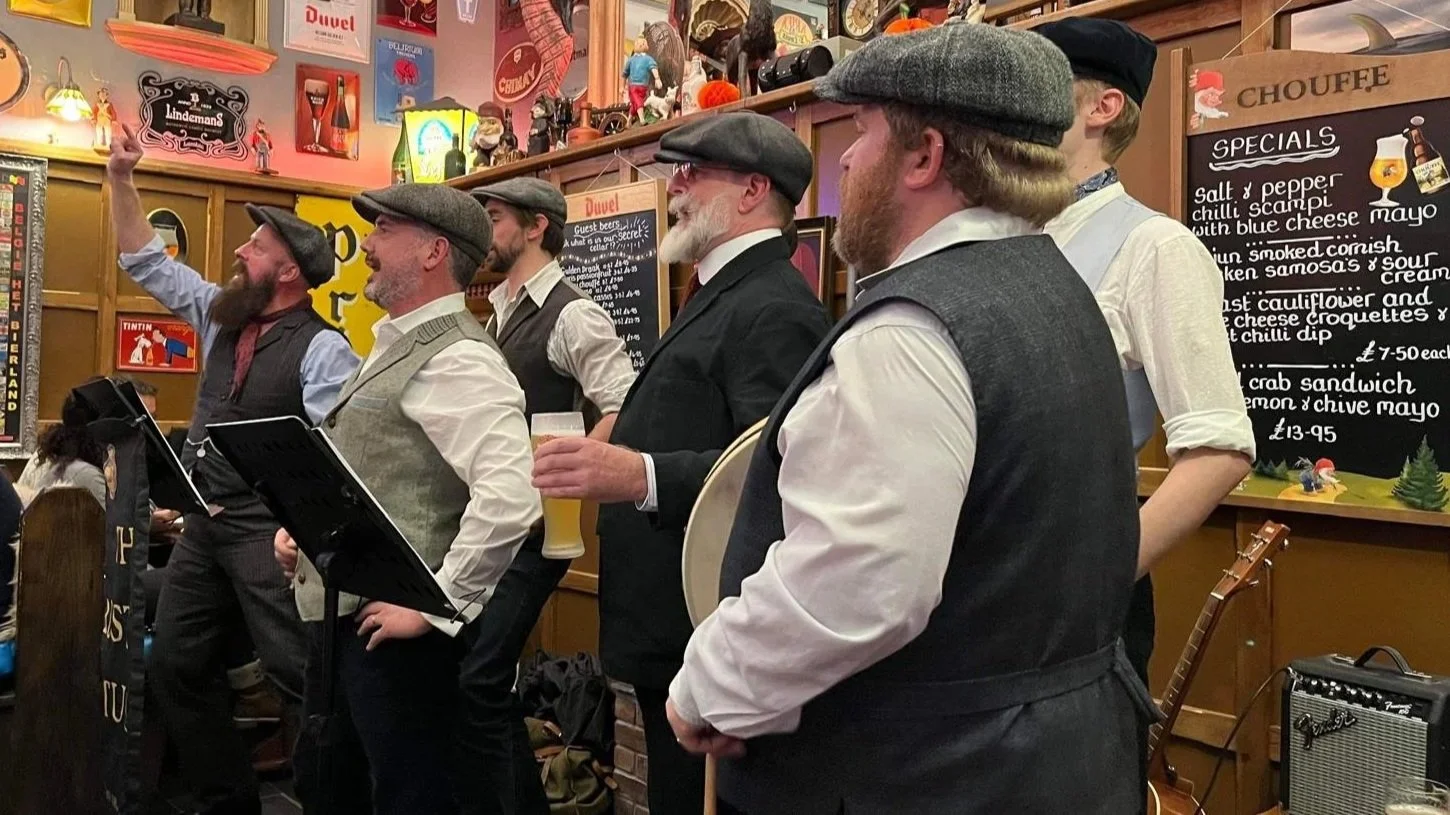
Some say The Rusty Tubs are the real drunken sailors!
Start with the Chorus
There you have it: ten sea shanties every beginner should know, and a few simple ways to get started.
The main thing to remember is that shanties were never meant to be polished or overthought. They are songs built for joining in: simple, strong, and made to be shared. You do not need to master every verse or prepare yourself for life at sea — though at the very least, you should be ready for a very good night down the pub. Just catch the rhythm, find the chorus, and let the rest come with time.
Whether you are learning at home, singing in the car, or belting one out in the pub, the best way to learn shanties is still the old-fashioned way: by listening, joining in, and doing it often.
If you want somewhere to begin, our album Rowdy Soul was made with exactly that spirit in mind — big choruses, strong rhythms, and plenty of room to sing along.
We’ll save you a space in the chorus.
