
Punk Attitude, Vintage Style: The Rusty Tubs’ Look
Before The Rusty Tubs sing a note, there is usually a fair bit to take in: flat caps, waistcoats, tweed jackets, boots, pocket watches, neckerchiefs, the odd bowler hat, and the occasional suspicious lapel pin.
For a Gloucestershire sea shanty and folk group, we do not exactly blend into the background.
That is rather the point.
Our look is not a strict uniform, and it is not historical reenactment, but it is deliberate. Like the songs we sing, it is rooted in history without being trapped by it: a bit working man, a bit country gent, a bit old pub rogue.
This is the story of where the look came from, what goes into it, and why it has become part of the act itself.
Why We Don’t Dress Like Other Shanty Bands
When The Rusty Tubs first came together, we knew the look mattered. Not because we were chasing fashion, but because a good group should be recognisable before it has even sung a note.
The Rusty Tubs have never been only a sea shanty group in the narrowest sense. Yes, we sing shanties, but we also sing drinking songs, folk songs, war songs and whatever else feels like it belongs in a noisy room full of people joining in.
So our look became something broader: distinctive, old-fashioned, rough around the edges, and recognisably ours. It is not fancy dress; it is a visual shorthand for the kind of group we are: traditional, rowdy, irreverent, and happier looking like The Rusty Tubs than like anyone else.
The Influences Behind Our Rowdy Vintage Style
The strongest influence on The Rusty Tubs’ look is the working men of the early twentieth century. Men in caps, boots, shirts and waistcoats; men who worked hard jobs in harsh conditions, then still found time for humour, song, drink and camaraderie when the day was done. A lot of the songs we sing belong to that world: work songs, drinking songs, marching songs, pub songs, and choruses made for ordinary people singing together. Naturally, there is a touch of Peaky Blinders in there too, though with less razor-blade menace and more chance of someone starting “South Australia” after a few pints.
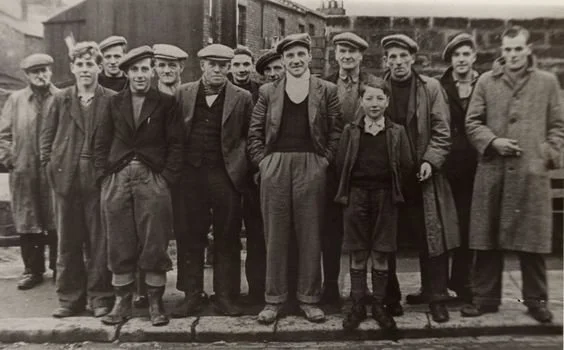
Lads from the 20s would look right at home singing with The Rusty Tubs
There is also a country gent thread running through the look: tweed, waistcoats, pocket watches, good boots, and a sense of connection to British rural life. Not polished aristocracy, exactly, but something more lived-in: cider, beer, muddy fields, old pubs, and songs passed around at an orchard wassail rather than preserved behind glass.
And then there is Cheltenham Races: outwardly respectable, well-dressed and steeped in tradition, but with the distinct possibility that by late afternoon everyone involved is making questionable decisions. That balance suits us nicely. Some of our songs may sound wholesome from a distance, but get closer and they are usually far more at home on a Friday night in a beer-soaked pub than in a Sunday school.
The Key Elements of The Rusty Tubs Look
The Rusty Tubs’ look is not built from one item. A flat cap on its own does not do it, nor does a waistcoat, a pocket watch, or a pair of old boots. The effect comes from the combination: practical clothes, traditional shapes, natural fabrics, small details, and just enough individual character that you'd recognise us in a crowd. Each Tub has his own take on the style, but the shared ingredients pull us together. We look related, not identical.
Flat Caps
The baker boy flat cap is probably the single most recognisable part of The Rusty Tubs’ look. It gives the group an instant silhouette: old-fashioned, practical, a bit working man, and a long way from modern stagewear.
That said, we are not interested in looking like we have all been stamped out of the same mould. Richard’s bowler hat has become part of his character, and Paul’s boater earns its place when the weather demands it. The cap sets the tone, but the variation keeps it human.

Bakerboy, bakerboy, bakerboy, bowler!
Waistcoats, Jackets and Trousers
Waistcoats, jackets and trousers are where The Rusty Tubs look really starts to come together. The aim isn’t to look like we are all wearing a crisp, fancy suit, but each element should feel chosen with intent. A tweed jacket, a wool waistcoat, heavy cotton trousers or a bit of corduroy can all sit comfortably together if the colours and textures speak the same language.
Earthy tones tend to work best: browns, greys, greens, rusts, creams, dark blues and muted checks. Bright modern colours usually pull the eye in the wrong direction. Pattern is welcome, but it is better when it comes through the fabric itself: herringbone, check, flecked wool, moleskin, corduroy, or something with a bit of age and texture to it.
The trick is to look put together without looking polished and smooth. A bit of a mismatch is fine. In fact, it helps. The outfit should feel lived in, not hired for the afternoon.
And for reasons none of us fully understand, blue denim jeans also seem to fit right in.
Boots
Boots matter because they keep the look grounded. A good pair of ankle boots gives the outfit weight: practical, sturdy, and ready for a long day of singing, walking, standing around, and finding the next pub. They do not need to be genuinely antique, ruinously expensive, or historically perfect, but they should look like they belong with the rest of the outfit.
Toe-cap boots, brogue boots, old-fashioned lace-ups, or something similarly solid all work well. The main thing is to avoid anything too sleek, modern, plastic-looking, or obviously sporty. Trainers may be comfortable, but they break the spell.
This is one part of the look where practicality has to win. Shanty festivals are not catwalks. If your boots look the part and can carry you through a full day without wrecking your feet, they have done their job.
Pocket Watches and Other Accessories
After the flat cap, the pocket watch might be the most important bit of Rusty Tubs clobber. It is a small detail, but it does a lot of work. A watch chain across a waistcoat instantly makes the outfit feel more deliberate, and the watch itself often carries a bit of personal meaning. Matt, for example, has a gold pocket watch from graduating university and a silver one from his wife, which he wore on their wedding day.
There are plenty of ways to wear one. A single Albert chain gives a simple line across the waistcoat, while a double Albert has a more ornate, balanced look. Gold, silver, brass, or darker metals can all work, depending on the rest of the outfit. The aim is the same: a practical-looking detail that adds character.
The same applies to the other accessories. Neckerchiefs, ties, pocket squares, braces, lapel pins and small oddities all give each Tub room to personalise the look. Matt has even been known to wear a reproduction of a bawdy fifteenth-century badge as a lapel pin, which is exactly the sort of detail that makes sense once you know us.

An important skill for A Rusty Tub is being able to stare, smouldering, into the middle distance.
How the Look Became Part of the Act
The look does more than make us easy to spot in photographs. At festivals, The Rusty Tubs are recognisable from down the street, though admittedly people usually hear us before they see us. The caps, waistcoats, jackets, boots and pocket watches all help create the impression before we have cracked a joke, started a chorus, or found the nearest bar.
There is something useful in the balance. The look is stylish enough to show we have made an effort, but rough enough around the edges that we still seem approachable. People tend to smile when they see us coming, which is a good place for any performance to begin.
It also gives us permission to be The Rusty Tubs. The clothes help set the expectation that we are going to be cheeky, irreverent and probably not entirely sensible. We can act like a gaggle of lads let loose at a festival because, by the time we arrive, people have already understood the joke. The look frames the mischief as harmless fun, which is exactly what it is.
In that sense, the clothes are not separate from the act. They are part of the invitation.
Vintage Style, Not Vintage Attitudes
For all the flat caps, waistcoats, pocket watches and old songs, The Rusty Tubs are not trying to live in the past. We love history because it has texture, character and some excellent choruses, but we are very much a modern group with a modern outlook.
Sea shanties and folk songs have always belonged to ordinary people: workers, travellers, drinkers, singers, communities, and anyone willing to raise their voice in company. That is still how we see them. We love meeting shanty enthusiasts, folk fans, festival-goers and curious passers-by from every background and walk of life.
Our look may be old-fashioned, but the welcome is not!
So, now you know how and why it's done, maybe we'll see you in the audience, singing along, wearing a flatcap!
